
Introduction
Understanding the boom on excavator is important for anyone using, renting, or buying a mini excavator. The boom is one of the main working parts of the machine. It connects the excavator body to the arm, bucket, and attachments, allowing the operator to lift, dig, reach, and move materials. On many mini excavators, a special feature called a swing boom gives even more flexibility. Instead of only moving up and down, a swing boom can also move side-to-side. This makes the machine more useful in narrow spaces, around walls, near foundations, and in residential job sites where repositioning is difficult. In this guide, we will explain what a swing boom does, how it works, where it is useful, and why it matters for efficient excavation work.
What Is the Boom on Excavator?
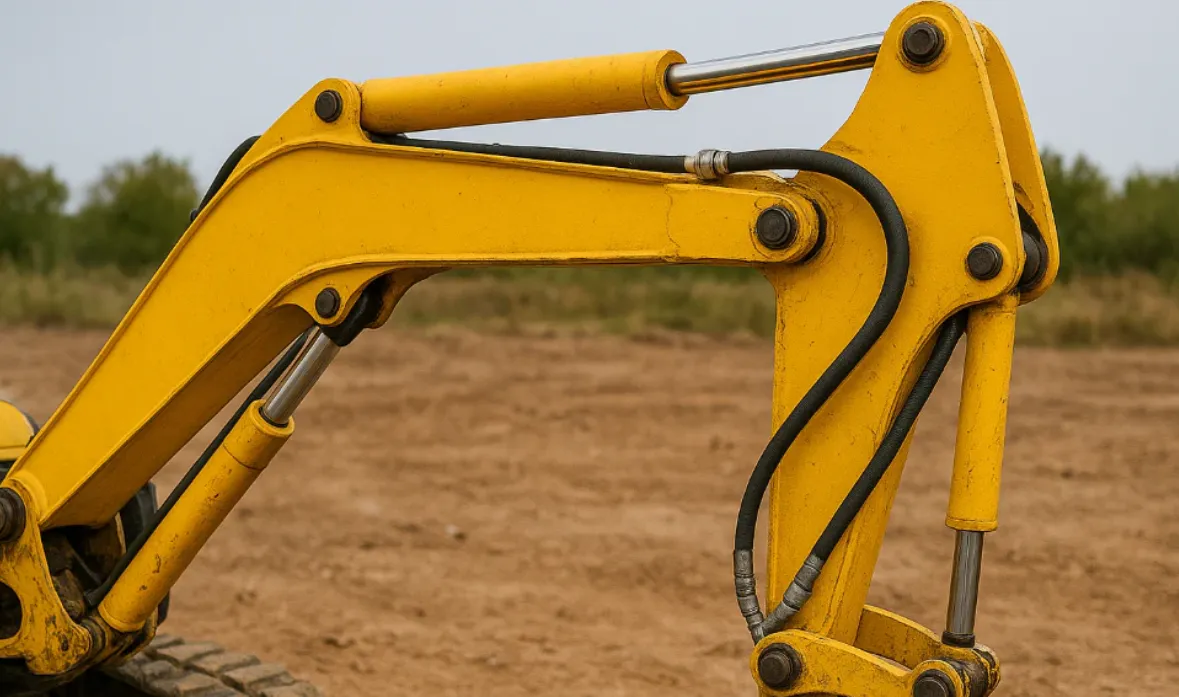
The boom on excavator is the large front structure connected to the machine’s upper body. It supports the arm, bucket, hydraulic cylinders, and attachments. When the operator controls the machine, the boom helps raise, lower, and position the digging tool.
In simple terms, the boom gives the excavator its reach and digging power. Without it, the machine could not dig trenches, lift soil, load material, or handle attachments properly.
A standard excavator boom usually moves up and down. It works well in open spaces where the machine can easily turn and reposition. However, in tight areas, a standard boom can limit movement. That is why many mini excavators use a swing boom system.
What Is a Swing Boom?
A swing boom is a boom design that can pivot left or right from the base. This side-to-side movement allows the operator to dig or work beside the machine without turning the entire excavator.
This feature is especially helpful when working:
-
Along walls
-
Near fences
-
Beside house foundations
-
In narrow backyards
-
Around trees or landscaping
-
In alleys or urban job sites
-
Near utilities or drainage lines
Instead of constantly moving the machine, the operator can keep the excavator in one stable position and swing the boom toward the work area. This saves time, reduces ground damage, and improves control.
How Does a Swing Boom Work?
A swing boom works through the excavator’s hydraulic system. Hydraulic cylinders push and pull the boom at a pivot point near the base. When the operator moves the control lever, hydraulic fluid creates pressure, allowing the boom to swing left or right.
The main parts of a swing boom system include:
-
Pivot joint: Allows the boom to rotate side-to-side.
-
Hydraulic cylinder: Powers the boom movement.
-
Pins and bushings: Help the pivot area move smoothly.
-
Control system: Lets the operator guide the boom accurately.
-
Hydraulic hoses: Carry pressurized fluid to the moving parts.
This system gives the operator more control when working in tight spaces. It also helps reduce unnecessary machine movement, which can protect lawns, driveways, gardens, and finished surfaces.
Why the Boom on Excavator Is Important for Mini Excavators
The boom on excavator affects how far the machine can reach, how deep it can dig, and how easily it can work around obstacles. For mini excavators, this is especially important because these machines are often used in compact job sites.
Mini excavators are popular for residential, landscaping, utility, and small construction projects. These jobs often involve limited access and delicate surroundings. A swing boom makes the machine more practical because it allows flexible digging without needing a large turning area.
For example, if a contractor needs to dig a drainage trench beside a house, a standard boom may require repeated repositioning. A swing boom can work along the side of the foundation while the excavator stays in one place.
Key Benefits of a Swing Boom
1. Better Performance in Tight Spaces
A swing boom allows the excavator to work close to structures. This is useful for jobs where there is not enough room to turn the full machine.
2. Less Repositioning
Moving an excavator again and again takes time. It can also damage soft ground. A swing boom helps cover more area from one position.
3. Improved Precision
Side-to-side boom movement gives the operator more control when digging near walls, pipes, posts, or landscaping features.
4. Reduced Ground Damage
Since the machine does not need to move as often, there is less risk of damaging lawns, gardens, sidewalks, or driveways.
5. More Efficient Utility Work
For trenching, irrigation, drainage, and cable installation, a swing boom helps create straighter and cleaner work paths in confined spaces.
Common Uses of a Swing Boom
A swing boom can be valuable in many real job situations. Some common uses include:
-
Digging trenches beside buildings
-
Installing drainage systems
-
Repairing foundations
-
Working along fence lines
-
Landscaping around trees and gardens
-
Cleaning ditches
-
Loading soil or gravel in tight spaces
-
Preparing small construction areas
-
Digging around underground utilities
For contractors, this flexibility can improve productivity. For property owners, it can mean cleaner work with less disruption to the surrounding area.
Swing Boom vs. Fixed Boom
A fixed boom is simple, strong, and suitable for open job sites. It is often preferred when the work area has enough space and the machine does not need to operate close to obstacles.
A swing boom is more flexible. It is ideal when the machine must work in narrow or restricted areas. The main difference is movement. A fixed boom mainly works in line with the machine, while a swing boom can move side-to-side.
Choose a fixed boom if:
-
You mostly work in open areas
-
You need simple operation
-
The job involves straight digging
-
Space is not a major issue
Choose a swing boom if:
-
You work in residential areas
-
You dig near walls or fences
-
You often work in tight spaces
-
You want better flexibility and control
Maintenance Tips for the Boom System
Like other moving parts, the boom system needs regular maintenance. Proper care helps the excavator perform smoothly and safely.
Important maintenance steps include:
-
Grease pivot points regularly
-
Check pins and bushings for wear
-
Inspect hydraulic hoses for leaks
-
Look for cracks or damage on the boom
-
Keep the hydraulic system clean
-
Replace worn parts before they cause bigger problems
-
Follow the manufacturer’s maintenance schedule
The swing boom has extra moving parts, so it may need more attention than a fixed boom. However, regular maintenance can prevent costly repairs and keep the machine working efficiently.
Safety Tips When Using a Swing Boom
Operating a swing boom requires focus and good control. Because the boom can move sideways, the operator must stay aware of nearby people, walls, machines, and underground utilities.
Follow these safety tips:
-
Check the work area before operating
-
Keep people away from the swing radius
-
Avoid sudden boom movements
-
Use slow, controlled motions near structures
-
Do not overload the bucket
-
Stay on stable ground
-
Watch for overhead and underground hazards
-
Use trained operators for difficult jobs
A swing boom improves flexibility, but safe operation is still the most important part of any excavation work.
Is a Swing Boom Worth It?
For many mini excavator users, a swing boom is worth it. It is especially valuable for contractors who work in residential construction, landscaping, utility installation, and drainage projects. The ability to work close to obstacles can save time and make jobs easier.
However, if most of your work is in open areas, a fixed boom may be enough. The best choice depends on your job type, work environment, budget, and how often you need side-to-side boom movement.
Before choosing a machine, think about your common projects. If tight access is a regular challenge, the swing boom can be a smart investment.
Conclusion
The boom on excavator plays a major role in digging power, reach, control, and job-site performance. A swing boom adds even more value by allowing side-to-side movement, making mini excavators more useful in tight and difficult spaces. Whether you are digging beside a foundation, working near a fence, installing drainage, or handling landscaping tasks, a swing boom can reduce repositioning and improve accuracy. It also helps protect finished surfaces by keeping the machine more stable and reducing unnecessary movement. For contractors and property owners who often work in compact areas, choosing a mini excavator with a swing boom can make excavation work faster, cleaner, and more efficient.
FAQ
1. What is the boom on excavator used for?
The boom on excavator is used to lift, lower, reach, and position the arm, bucket, or attachment. It helps the machine dig, load, lift, and move materials.
2. What is the difference between a boom and an arm?
The boom is the larger section connected to the excavator body. The arm, also called the stick, connects between the boom and the bucket.
3. Why is a swing boom useful on a mini excavator?
A swing boom is useful because it moves side-to-side. This helps operators work near walls, fences, foundations, and other tight spaces without moving the whole machine.
4. Does a swing boom need more maintenance?
Yes, it may need slightly more maintenance because it has extra pivot points, pins, bushings, and hydraulic parts. Regular greasing and inspection are important.
5. Is a swing boom better than a fixed boom?
It depends on the job. A swing boom is better for tight spaces and work near obstacles. A fixed boom can be enough for open areas and simple digging tasks.
 Same
Same